
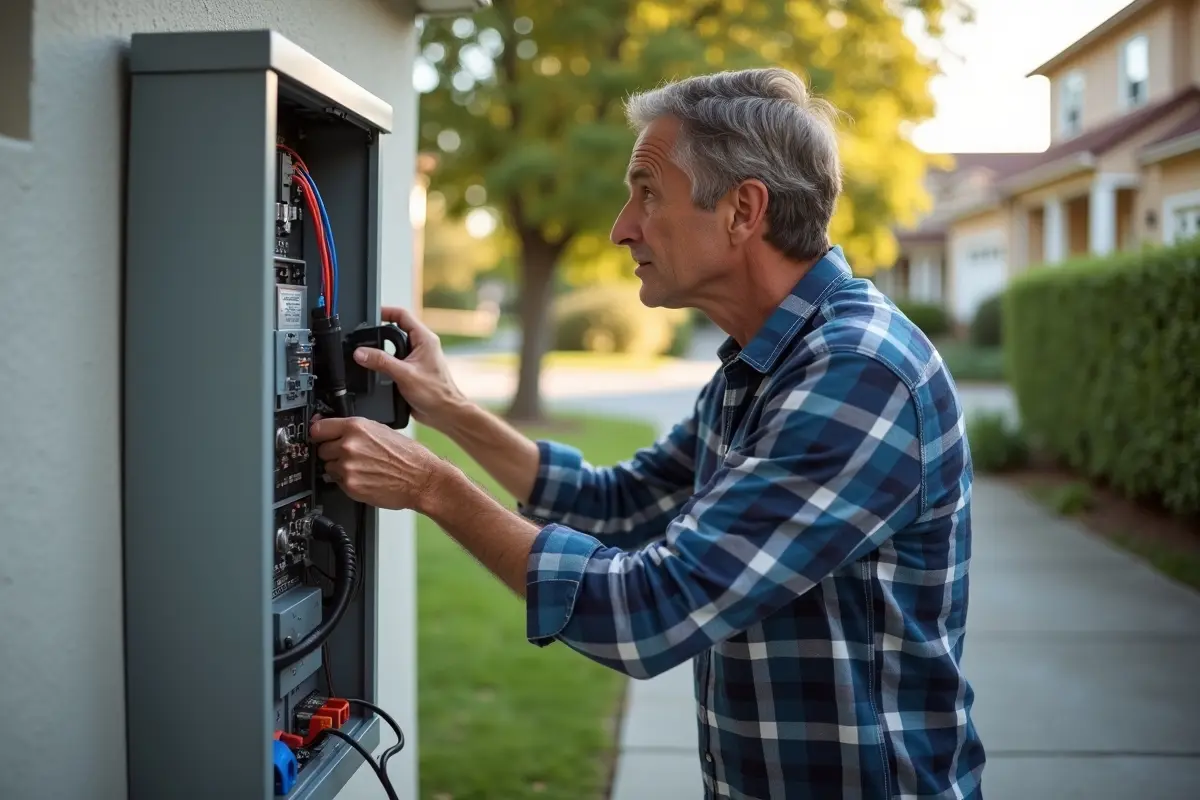
Buying an electric vehicle is all fine and dandy until you realize charging it at home might be a problem. People think getting a charger will be enough. What they don’t realize is their electrical system isn’t up to the challenge and what’s expected to be a simple charger installation ends up being an electrical service upgrade that costs thousands more than expected.
This truly blindsides the average person because no one ever accounts for their home’s electrical output until they need more of it. The car is already in the driveway or on order, but now extensive electrical work needs to be done to support the needed charging.
Why Home Electrical Systems Cannot Support EVs
The issue is that home electrical services exist at a size that accommodates most household demand. That seems like plenty enough until you add it all up. Air conditioning, electric heat, water heater, oven, dryer; these are appliances that take tons of electricity to power. Now add a continuously running EV charger pulling major current for hours and it’s maxed out.
It’s not only about total demand, but simultaneous demand. The AC runs, dinner is being cooked, the dryer is going, and now the car wants to start charging. The combination of all these electrical endeavors exceeds what the service can support. Breakers trip; the worse scenario being that nothing trips and the system is running overloaded—an absolute fire hazard.
Older homes with lower sized electrical service almost always need an upgrade to charge their EV. Even larger services sometimes cannot accommodate the demand of modern loads plus those of vehicles, especially if someone uses electric heat or multiple larger appliances need assistance at once.
What An Upgrade Entails
Upgrading one’s electrical service means upgrading/replacing the entire main panel, replacing the meter base (or adding/replacing with a smart meter), and rerunning the service lines from the street to the house. It’s not just changing a breaker, it’s substantial utility company work and per-mit-required projects.
First, an electrician assesses the project. They review the loads and see how much of a service capacity home would need to support current demand plus that of charging an EV. This often shows that additional improvements would also be necessary since everything needs to be up to code.
To get an ev charger install right means working with electricians who pay attention to everything—and not just where the charger itself should go. They assess if the existing service can accommodate additional load or if it needs an upgrade before they can even consider installation.
The actual work involves power company disconnect, systems replacement, inspections and reconnection. There are times where power is needed off, which means there needs to be a game plan in place. The entire process from start to finish can take weeks when they factor in permits and waiting for the utility company.
The Cost of Reality
Electrical service upgrades cost thousands depending upon how complex they are and how far the main line is to the street—for example, if it’s a long way down, that’s more expensive cable needing replacement. Can existing conduit be reused or does it need replacing? What are the local permit fees? Does the utility company charge anything?
All of this is in addition to estimated charger costs plus installations. People budget for a charger and installation; what they don’t factor in is service upgrade potential. The total process can easily double what people thought they were spending.
Some municipalities offer rebates or incentives for electrical upgrades relative to EV infrastructure—which still does not offset everything people are blindsided about when buying an EV.
When Is An Upgrade Not Required?
Not every home needs an upgrade to charge their EV. Many newer homes have larger electrical services that work without an issue—especially if they use natural gas for heating and other major appliances.
Load management systems can help avoid upgrades by managing when high-draw devices operate. Smart chargers reduce charging rate if other loads come into play while systems do not allow multiple high-draw items from operating simultaneously. This helps some have enough power without any issue from their existing smaller service.
Lower power charging is an option as well. A smaller charger (meaning not a larger unit) provides less draw than a larger one; it takes longer to charge—but if the car sits overnight or every night, slower charging could suffice without needing electrical upgrades.
The Panel Upgrade Option
Sometimes the main service is big enough (310A service) but there isn’t enough panel space. Upgrading only the panel without upgrading the service costs cheaper than upgrading both because what’s functioning already is fine; it’s just access that’s not.
Panels could have issues regardless of EV charging if they’re too old with not enough breaker spaces or if they don’t meet code for design/age/resale value as well as safety protocol. Sometimes an EV charger just affords someone new work that was going to be needed anyway.
Subpanels come into play if there is enough capacity in the main panel but no physical space; a subpanel can be brought closer to where the charger would be for its own dedicated circuit and this works only if there’s enough current available but distribution is limited.
Assessing Before Buying The EV
The best way to get ahead of this project is to assess electrical capacity before buying any EV at all—not after. This means hiring an electrician to evaluate the space and provide potential upgrade costs which can help someone realize their costs of buying an EV over time.
Some find out their homes don’t need any work but they’re going to get it done anyway before purchasing. Others find out they have enough capacity and can proceed without stress. Finding out beforehand alleviates surprises and additional unnecessary expenditures later.
For new home buyers looking to buy an EV, getting the electrical system assessed during an inspection makes sense. Finding out it needs substantial work to charge an EV makes sense for negotiating and future considerations.
The Correct Installation Sequence
Getting this sequence right avoids expenditures gone wrong. Properly assessing electrical capacity before any charger installation is required. If it’s found that an upgrade is necessary, get that taken care of first before installing anything.
If someone installs a charger first but then realizes there needs to be an upgrade down the line due to panel location or configuration, this only costs additional money people didn’t need to spend in the first place.
And if there’s a utility component for system upgrades, that means potentially waiting for them—which is why scheduling them early on when there isn’t clear construction can save time once everything else is set up.
Permits/inspections also go into play here. Service upgrades require permits and subsequent inspections up the wazoo; doing this all fast or skimming over things means noncompliance with code requirements and insurance coverage—that isn’t worth it when doing things right could take time but protect the investment.
Why This Is Important Beyond Just Charging
Electrical systems that upgrade services do so much more than just charging – they’re better for homes, better for safety goals in mind. Old services often have more issues than just limited capacity—old panels, improper ground systems/Al wiring/code violations get addressed in this work too.
All of this increases property value—as upgraded systems are appealing and what a property can handle going forward—for however much additional effort—both better than most systems done at the onset. Even if someone sells their EV after servicing, at least all work done will still benefit whatever comes next.
Insurance companies care about this type of thing as well—as old services either change coverage or what rates are set; going modern sometimes decreases these rates along with charging for an EV.
The Reality Of Charging At Home For Most People
Most people will charge their vehicles at home—but it’s not as simple as plugging them in without hassle—or hassle-free accommodations. Homes must have proper electrical capacity and for many, this means upgrades are necessary.
If people understand this going into a purchase instead of factoring it in later—as well as making plans for how/when/how much—the process becomes less overwhelming and stressful than realizing there’s so much more than meets the eye when buying an EV.
The investment is worth it since most people would prefer charging at home rather than public stations—but as long as it benefits one’s electrical systems downstream as well—as long as ownership expectations realize such developments—they’ll see how this makes sense overall instead of just thinking about a cheap vehicle purchase upfront.