
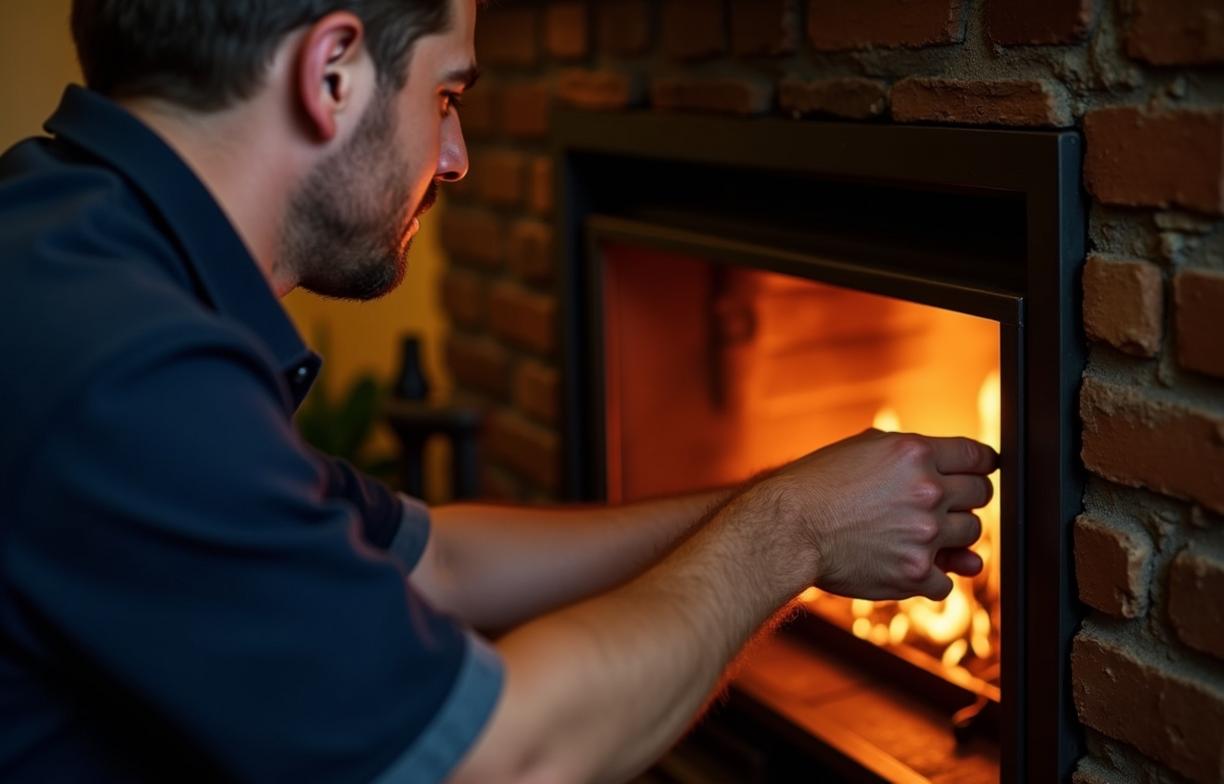
A chimney and fireplace service before the first fire of the season is a crucial safety check. Soot, animal nesting, cracked liners, and closed dampers can all turn a pleasant first burn into a smoky room or a chimney fire.
The best time to schedule the work is late summer or early fall, before overnight temperatures push everyone onto the same appointment calendar. The National Fire Protection Association’s NFPA 211 standard says chimneys, fireplaces, and vents should be inspected at least once a year for soundness, deposits, and correct clearances.
What should be checked before the first fire
A pre-season visit should start at the firebox and end at the chimney cap. The technician should inspect the firebox, damper, smoke chamber, flue liner, flashing, crown, cap, and exterior masonry. For wood-burning systems, the flue is usually checked for creosote, bird nests, leaves, mortar gaps, cracked tiles, and blockages.
Creosote matters because it can ignite inside the flue. The Chimney Safety Institute of America notes that creosote is highly combustible in any form, and that enough buildup combined with a hot flue can trigger a chimney fire — which is why its advice is simple: clean chimneys don’t catch fire, so sweep before use.
The inspection should also confirm that the flue is the right size for the appliance. An oversized flue can cool smoke too quickly, which causes condensation and more creosote. An undersized flue can spill smoke and carbon monoxide into the room.
The inspection level that fits your situation
NFPA 211 defines three levels of chimney inspection, and the right one depends on what changed since the last safe use. Not every home needs camera scanning or demolition-level access, but some situations demand more than a quick look with a flashlight.
| Situation | Best fit | What it includes |
|---|---|---|
| Same fireplace, same fuel, no problems last season | Level 1 inspection | Readily accessible areas, basic structural check, visible deposits |
| New home purchase, new insert, fuel change, relining, or performance issue | Level 2 inspection | Level 1 items plus accessible attic, crawlspace, roof areas, and video scan of internal flue surfaces |
| Suspected chimney fire, storm damage, major leak, or hidden structural concern | Level 3 inspection | Level 1 and 2 items plus removal of needed components or finishes for access |
A Level 2 inspection is the safer choice when you bought the house since the last burn. Sellers may not know whether the fireplace was used correctly, and an unused fireplace can still have nesting or liner damage. Many real estate-related chimney defects are hidden above the damper or behind a decorative surround.
If the fireplace was smoky last winter, do not treat cleaning as the only fix. Smoke rollout can come from a blocked flue, negative house pressure, a cold exterior chimney, a short flue, or a damper that does not open fully. A technician may measure draft and check whether kitchen fans, clothes dryers, or whole-house fans are pulling air down the chimney.
When sweeping is enough
Sweeping may be enough if the system has a sound liner, no water stains, no missing mortar, no smoke problems, and only normal soot accumulation. A standard sweep often takes 45 to 90 minutes for a single flue when roof access is straightforward.
Ask whether the sweep includes the smoke chamber, not just the vertical flue. The smoke chamber sits above the damper and funnels smoke into the liner. Rough, corbeled smoke chambers can hold heavy deposits in ledges and corners.
When repairs should come first
Do not burn if the liner is cracked, the damper is stuck, the chimney crown is broken, or the cap is missing and animals may have entered. Clay tile liners can crack from chimney fires, freeze-thaw cycles, or rapid temperature shock. Stainless steel liners can be damaged by corrosive condensation from appliances that vent into the wrong flue.
A missing chimney cap is more than a rain issue. Raccoons, squirrels, birds, leaves, and wind-driven debris can block the flue. In many areas, chimney swifts are protected under the Migratory Bird Treaty Act, so active nests may have to be left until the birds leave.
Firebox, damper, and hearth details to verify
The firebox should have no loose bricks, open mortar joints, or gaps where flame can reach framing. Firebrick is designed for high heat, while ordinary brick and mortar can deteriorate faster under repeated fires. If you can scrape mortar out with a screwdriver, it needs attention before regular use.
The damper must open completely and remain open during burning. A throat damper that is warped or rusted may look open from below while still restricting exhaust above the firebox. Top-sealing dampers should have intact cables and gaskets, because a failed gasket can leak air and admit water.
Hearth extension dimensions also matter. NFPA 211 commonly requires at least 16 inches of hearth extension in front of the fireplace opening for smaller fireplaces and 20 inches for openings of 6 square feet or more. Side extensions are commonly 8 inches for smaller openings and 12 inches for larger ones.
Do not place rugs, baskets, kindling boxes, or upholstered furniture close to the opening. The U.S. Fire Administration advises keeping anything that can burn at least 3 feet from fireplaces and other heating equipment. That distance includes holiday décor, curtains, stacked firewood, and children’s toys.
Glass doors and screens
Glass doors should be open while a wood fire is actively burning unless the manufacturer says otherwise. Closed doors can restrict combustion air and overheat certain fireplace components. Mesh screens should stay closed to control sparks.
If the glass is cracked or the track is bent, repair it before lighting a fire. Tempered or ceramic fireplace glass is not the same as standard window glass, and substituting the wrong material can lead to breakage under heat.
Fuel choices before the first burn
Use seasoned hardwood with a moisture content of 20% or lower. A handheld moisture meter can check a freshly split face, not the dry outside surface. Wood that hisses, bubbles at the ends, or produces lazy orange flames is usually too wet.
Oak, maple, ash, and beech usually burn longer and cleaner than softwoods when properly seasoned. Pine can be used in some fireplaces, but it burns faster and can contribute to deposits if burned wet or smoldered. The bigger creosote problem is moisture and low fire temperature, not one specific species.
Never burn painted wood, pressure-treated lumber, plywood, cardboard piles, glossy paper, or trash. Treated wood can release arsenic-containing or copper-based preservatives, depending on age and treatment type. Manufactured logs should be used only according to the fireplace and log instructions, especially regarding one-log-at-a-time limits.
Wood should be split and stacked off the ground with airflow on the sides. Cover the top, not the entire stack, so moisture can escape. Many hardwoods need 6 to 18 months of drying after splitting, with oak often needing the longer end.
Carbon monoxide and smoke alarms before lighting
Install carbon monoxide alarms outside sleeping areas and on every level, following the manufacturer’s placement instructions. The U.S. Consumer Product Safety Commission recommends CO alarms in homes with fuel-burning appliances or attached garages. Fireplaces qualify because incomplete combustion can produce carbon monoxide.
Test smoke alarms and CO alarms before the first seasonal fire. Replace smoke alarms that are 10 years old. Many CO alarms expire after 5 to 10 years, depending on the sensor, and the date is usually printed on the back.
If an alarm sounds, leave the house and call emergency services. Do not open windows and stay inside to “air it out,” because CO can impair judgment and cause collapse. Symptoms can include headache, dizziness, nausea, weakness, confusion, and chest pain.
What to ask when scheduling service
Ask whether the company follows NFPA 211 inspection levels and whether the technician is certified by CSIA, NFI, or another recognized credentialing body. Certification is not the same as a license, but it shows training in codes, draft, venting, combustion, and inspection practices.
Request a written report with photos. A useful report should identify the flue served, the inspection level performed, defects found, and whether the appliance is acceptable for use. Vague notes such as “needs work” are not enough when you are deciding whether to burn.
A routine inspection and sweep for a single wood-burning fireplace commonly falls between $150 and $375 in many U.S. markets, depending on access, flue height, and deposit level. Expect longer appointments if the roof is steep, the flue needs camera inspection, or the smoke chamber has heavy buildup.
Also ask how they protect the room. A professional setup should include drop cloths, a sealed vacuum system with fine-particle filtration, brushes or rotary tools sized to the liner, and containment around the firebox opening. Soot particles are small and can spread fast if the fireplace is brushed without negative pressure.
First-fire checklist after the service
Open the damper fully and shine a light upward before lighting. Even after service, confirm that no shipping plug, insulation, bird screen debris, or loose part is blocking the path. Check that the cap is visible from outside and has not shifted after high wind.
Prime a cold flue if needed. Roll a sheet of newspaper, light it, and hold it near the damper area for a short time to start upward draft before building the fire. This helps when an exterior masonry chimney is cold and dense air is falling down the flue.
Start with a small, hot fire using dry kindling and a few small splits. Avoid packing the firebox full on the first burn. Watch for smoke spilling at the opening, unusual odors, crackling from the chimney walls, or stains appearing around the fireplace surround.
Close the fireplace screen, keep the damper open until ashes are cool, and place ashes in a metal container with a tight lid. Store that container outside on a noncombustible surface, at least several feet from the house, because buried embers can stay hot for more than 24 hours.